On their own
Agents research, compare, draft and keep track within the assignment. Colleagues hand each other work and report back to the Chief of Staff.
For founders with too many open loops.
Delegate to AI, but for real. Your Chief of Staff and team do the work, check with you before anything goes out, and keep track of everything still open, so you don't have to.

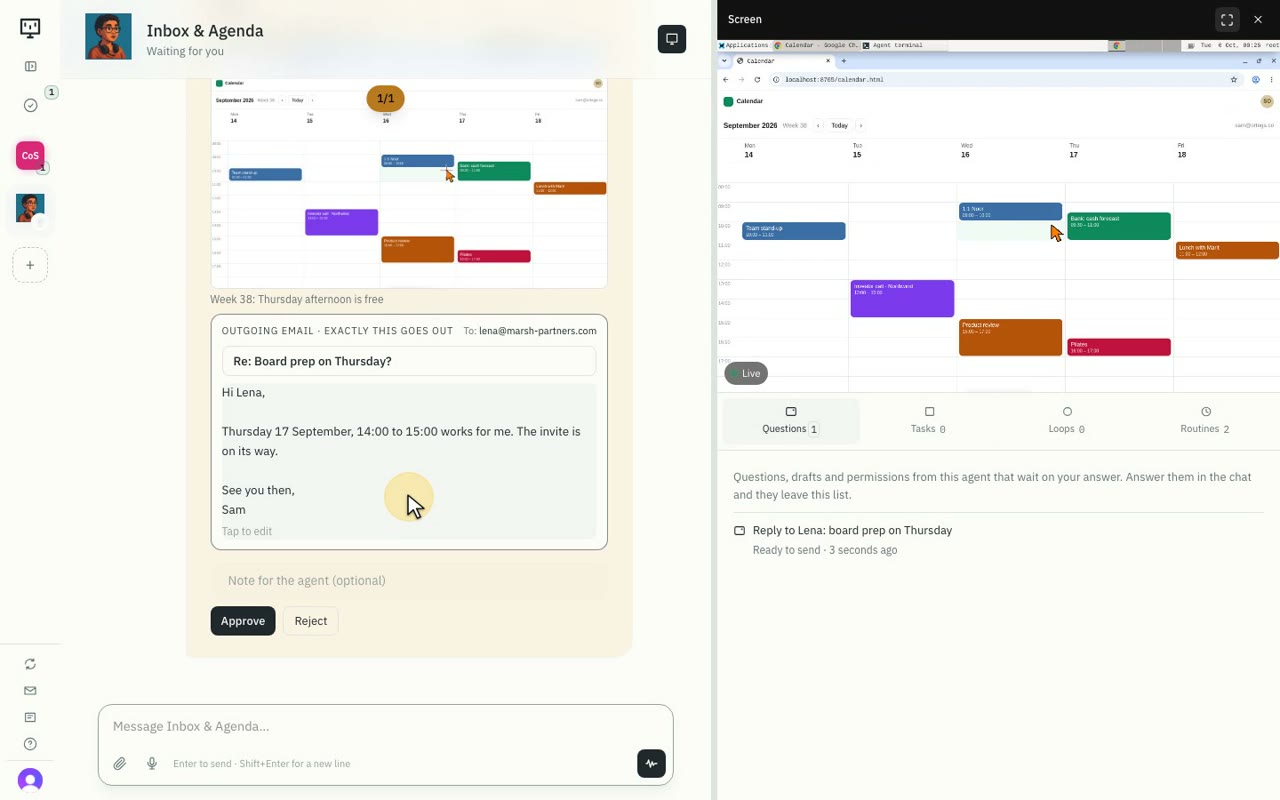
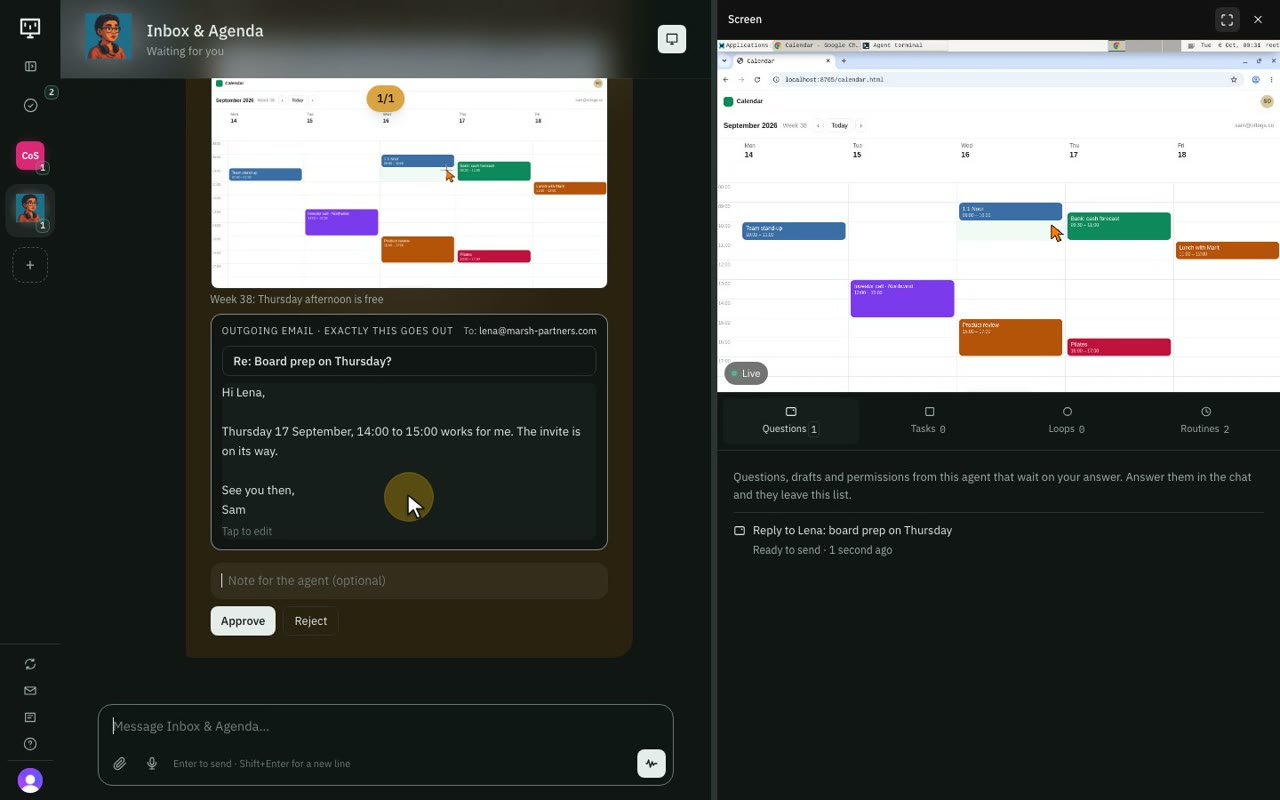
The screen and the conversation, together. Lena asks for a board prep; Inbox & Agenda reads the mail, checks the calendar on its own computer and puts the reply in front of you. One yes, and it is sent and booked.
 Inbox & Agenda
“Lena wants to do the board prep this week. Find a slot that works and set it up.”
Recorded from the product, sped up. The mailbox and calendar are stand-ins.
Chief of StaffThe proposal is ready. One decision before it can go out: pricing. Two options, my advice is the first.
Chief of StaffStill open: Acme’s proposal, waiting on pricing since Monday. You wanted to stay under €8,000. The first option fits.
Chief of StaffSent to Acme with the €7,400 option. The final proposal is attached, and the loop is closed.
The conversation continues while your attention goes elsewhere. You hand something off and move on. A day later the work has stopped, because it needed one answer from you and the message got buried.
Busy, missed it, forgot about it? Tomorrow morning it is back on your desk, with everything you need to decide in one glance. When it's your call, the question comes with the context.
Every open loop sits in a register with who it waits on and when it comes back. Say not now and pick a moment, or drop it. Nothing asks you twice for the same thing on the same day.
Agents research, compare, draft and keep track within the assignment. Colleagues hand each other work and report back to the Chief of Staff.
Emails, messages, invites and payments come to you first as the complete draft. Edit it, approve it or turn it down; a yes covers that one message. The same goes for anything that cannot be undone.
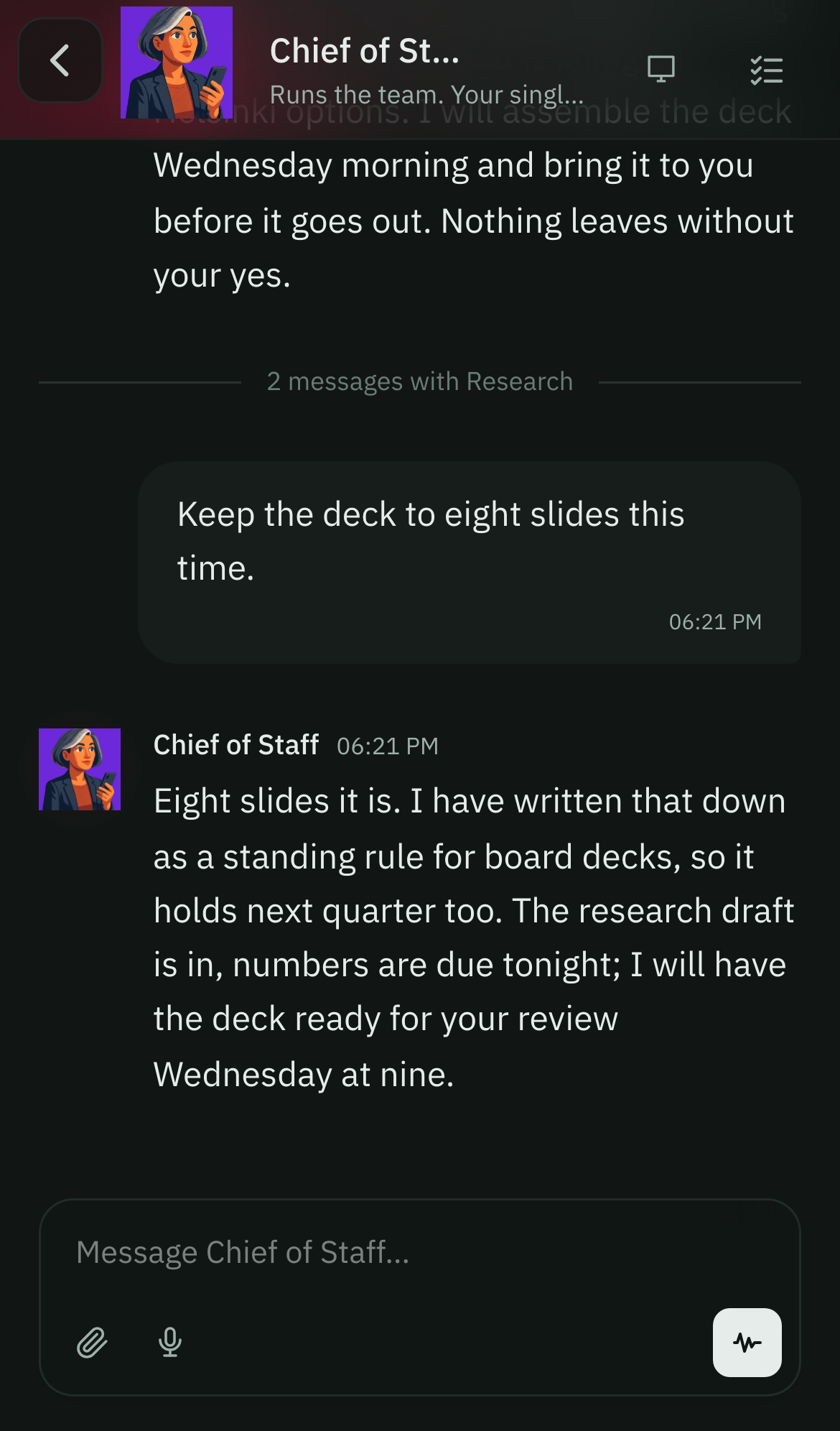
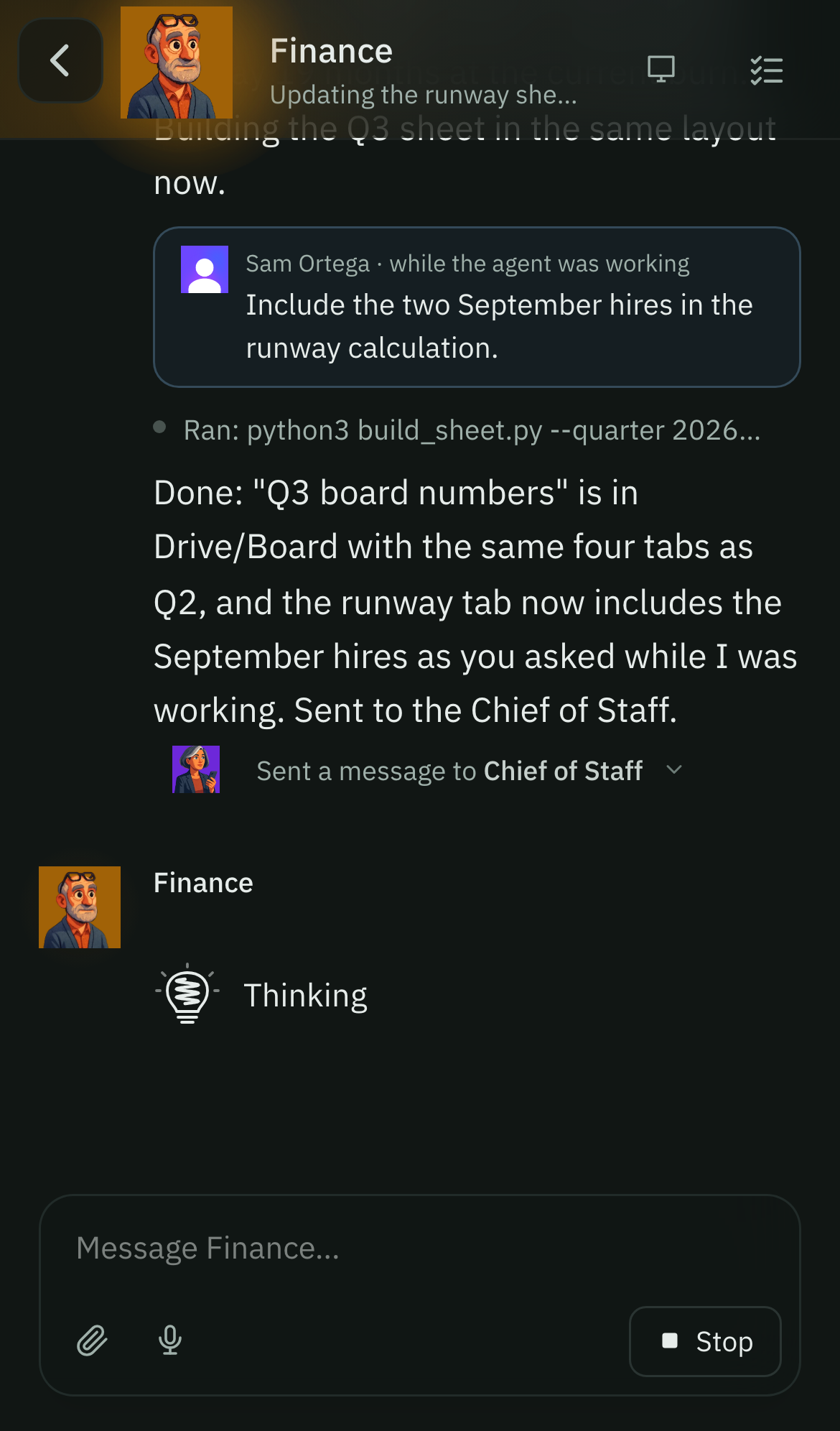
A conversation. Tell them what matters, correct an agent mid-task from your phone, postpone anything to a moment that suits you or drop what no longer matters.
Say what you need the way you would tell a person. It keeps a handbook of how you like things done and holds the team to it: a clear role for each specialist.
What waits on you, on a client, on the team, and when it comes back. Requests, promises and replies stay connected to their next step, so nothing stays buried in an inbox.
A real desktop with a browser and a terminal, per agent. The chat sits alongside the screen where the work happens; you can watch and take over with a tap.
Connect your mail, calendar, documents, chat, CRM and bookkeeping once. For a site without a connection there is the browser on each agent's computer.
 Gmail
 Google Calendar
 Google Drive
 Google Sheets
 Outlook
 Microsoft Teams
 Slack
 Notion
 GitHub
 Linear
 Jira
 Asana
 Trello
 Todoist
 HubSpot
 Salesforce
 Stripe
 Shopify
 QuickBooks
 Airtable
 Zoom
 WhatsApp
 LinkedIn
 Zendesk
Over 1,500 apps in all, through Composio. Browse them all
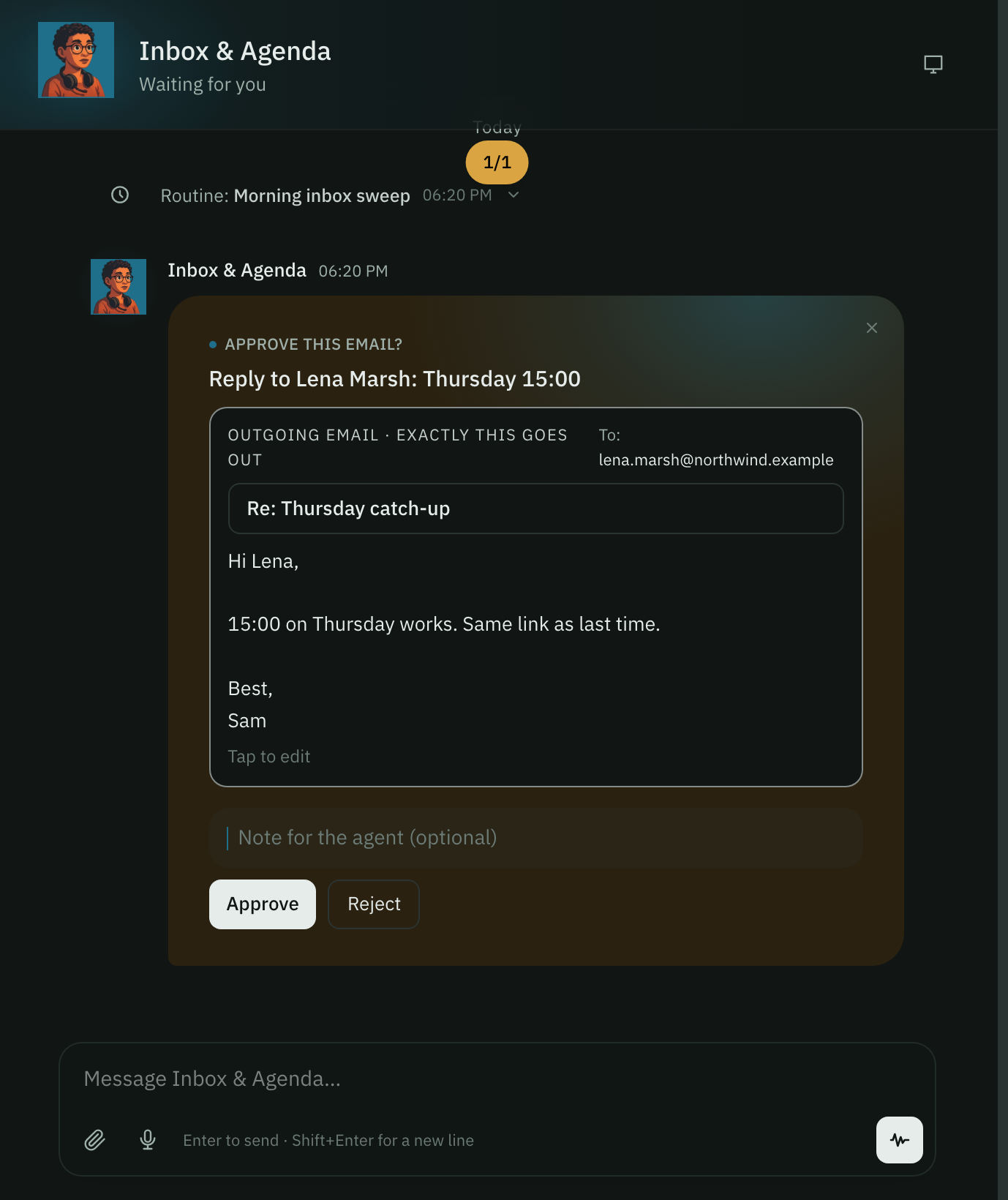
The morning sweep found a meeting request. The Inbox agent checked the calendar, wrote the reply and put it in front of you, subject line and all. Approve, edit or reject. Only then does it send.
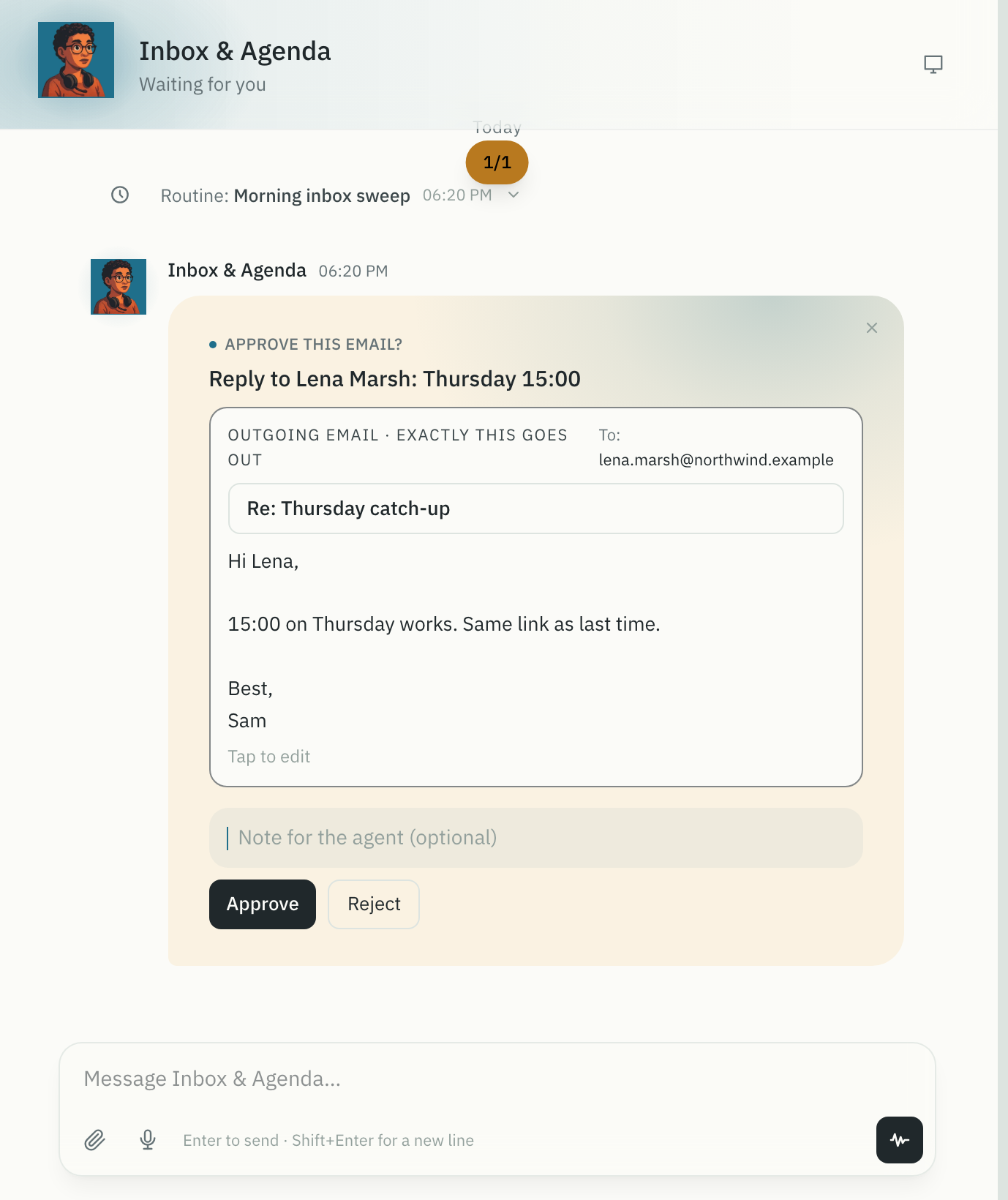
The same conversation, in a quieter layout: the chats, the cards, the live screen of every computer with keyboard and trackpad. Send a correction from the train while an agent is working and it picks it up mid-task. Dictate instead of typing. Everything keeps running after you lock the phone.
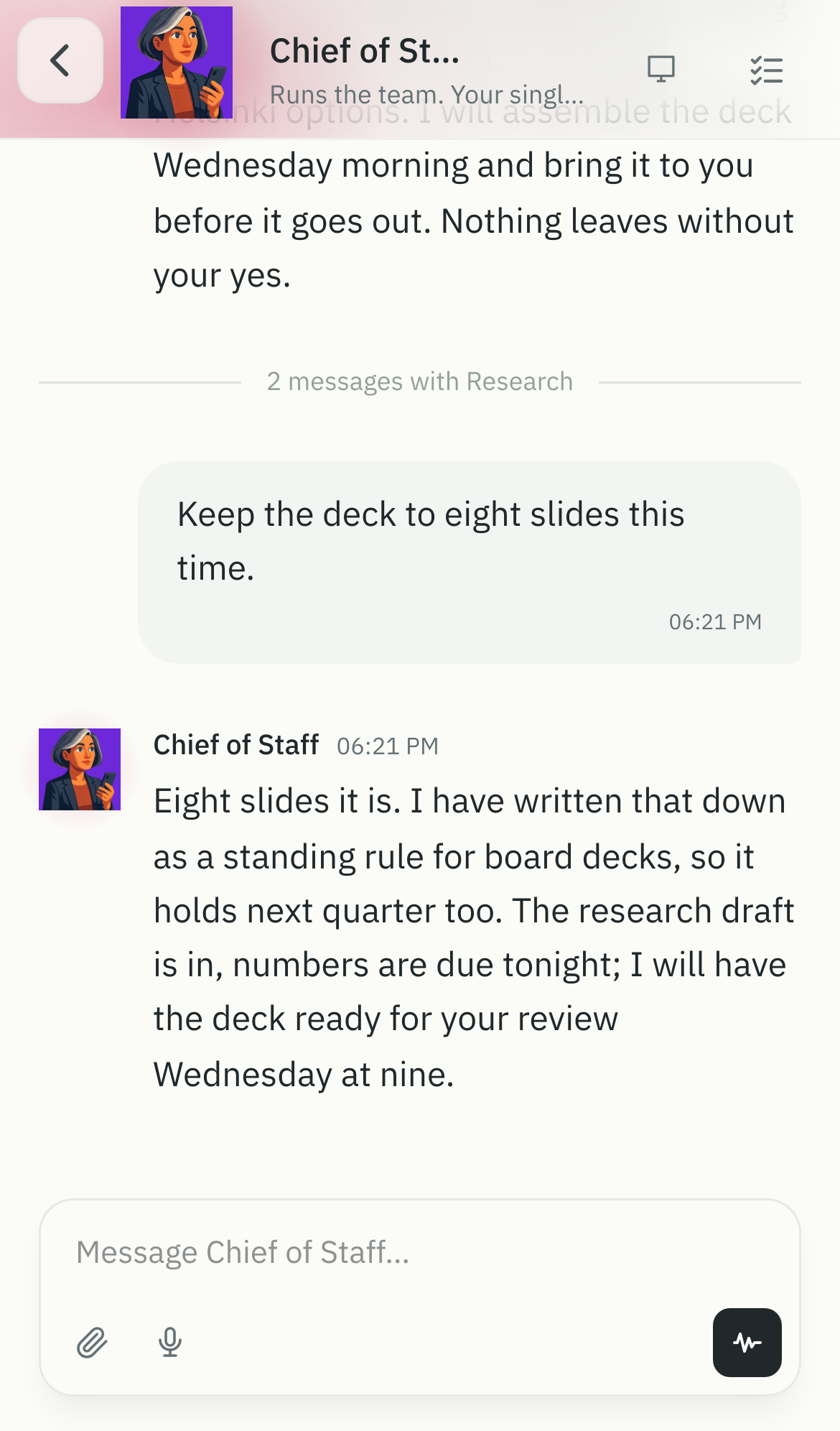
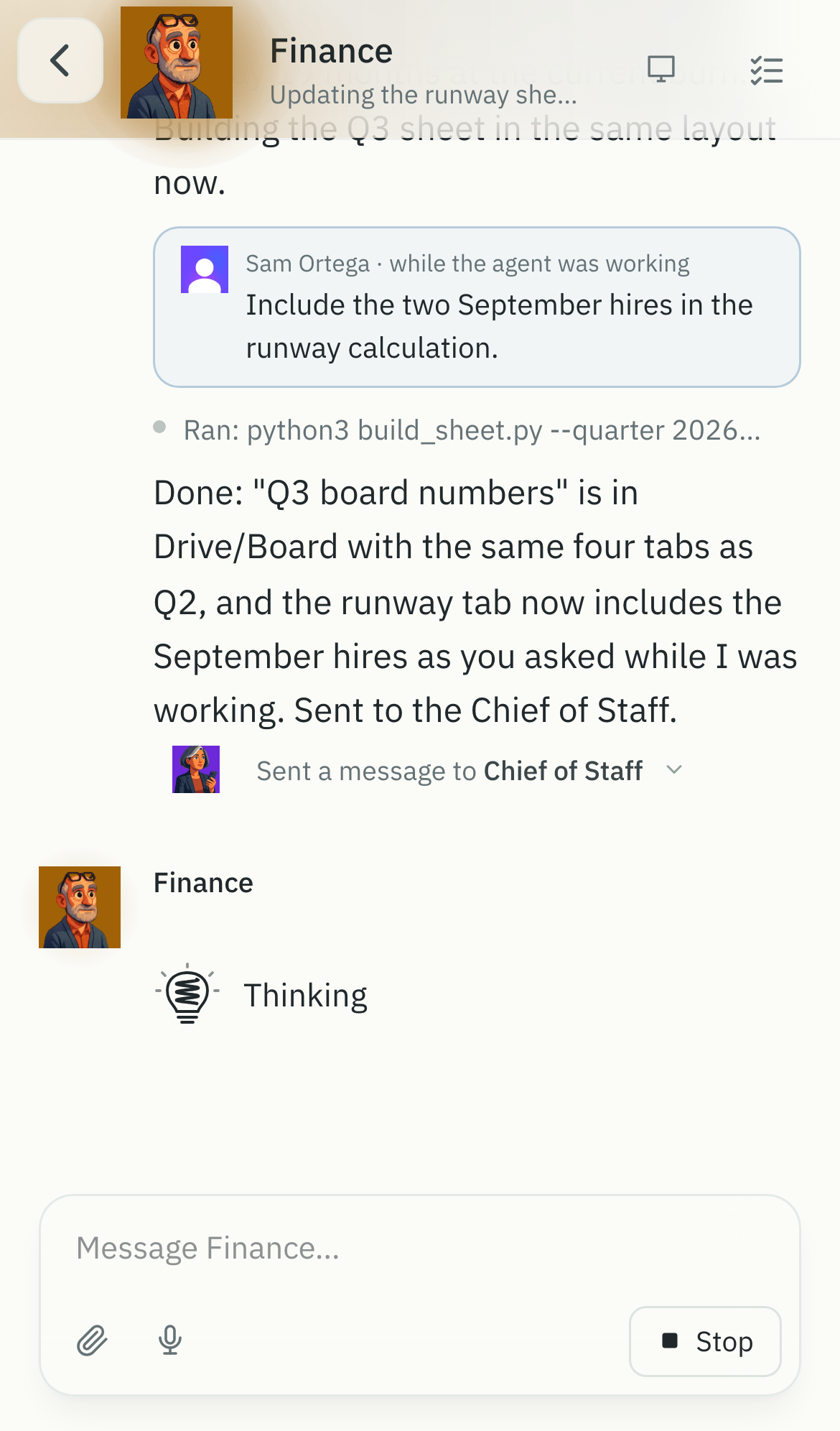
On day one it asks what you do, where your time goes and what you would rather never touch again. Then it proposes a roster: which roles, what each one owns, which apps they need, and a portrait style. You say yes, or change it. As your work changes, the Chief of Staff suggests adding, merging or retiring agents.
Sam, startup founder. Sam runs a twelve-person software company: board, investors, hiring, a product to ship. The Chief of Staff proposed five lanes and flat vector portraits.




Tell your Chief of Staff what your days look like and where the time goes. It proposes a team, you keep the parts you want, and they get to work.